"It's very expensive."
That is what the stallholder said to me, before I had even mentioned the price.
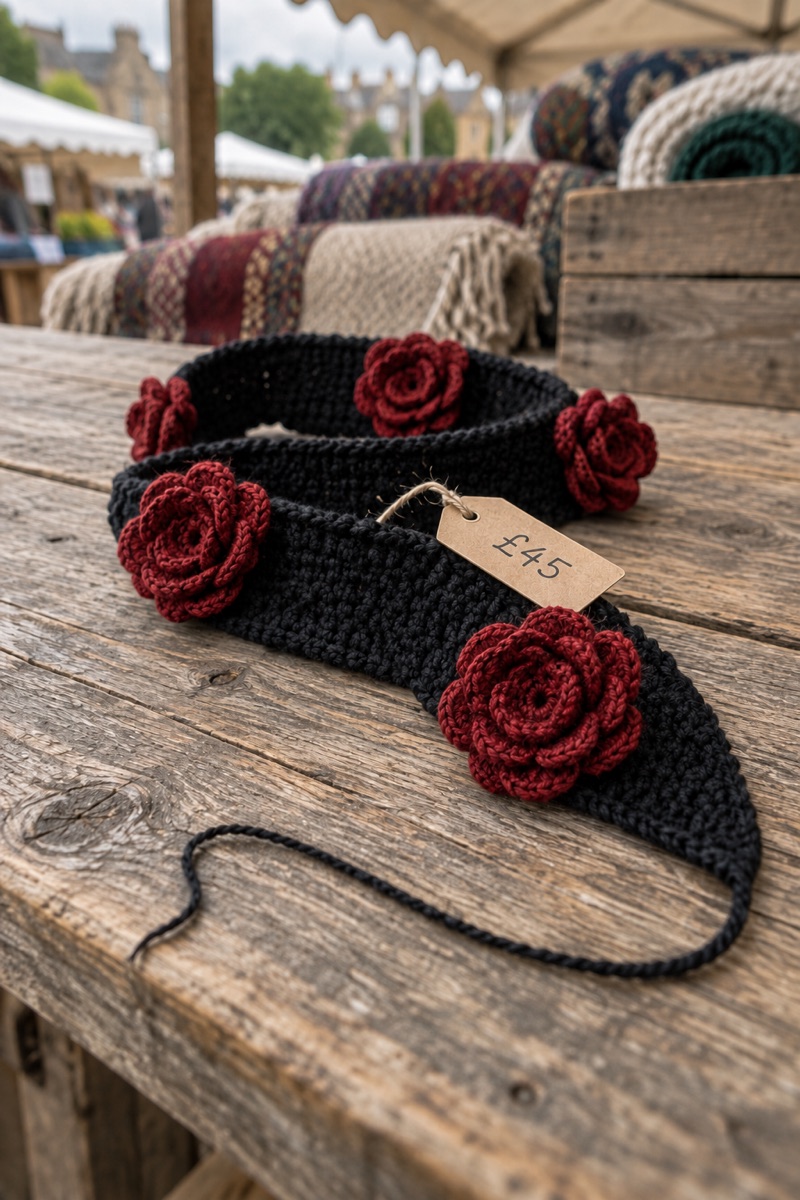
I had picked up a crochet belt on their stall. Black, with red roses worked into it. I asked what it cost.
£45.
I paid it. No haggling, no pause.
What went through my head was: is that all?
Two different readings of the same number, standing on opposite sides of the same stall. To them it was a figure that needed defending. I was looking at a belt there was only one of, and I wanted it.
Then they asked something I keep thinking about.
Would I buy another piece from them at the same price?
That is customer research from the one person who had just proved they would pay.
My honest answer: the price would not be what stopped me.
The colour would.
Two things have stayed with me.
The first is the apology.
"It's very expensive" arrived before any objection from me. It handed me a doubt I had not turned up with.
I have seen people do exactly this with a day rate.
If a handmade bag is £85, it is £85. The materials, the hours and the fact that only one exists carry the number. The maker does not have to carry it as well.
The second is what I actually bought.
Not crochet. Not a category. That belt.
Which is why I think "there is only one of this" does more work than "we have five of these".
This was the market I wrote about recently. The one whose rules say handmade, ethical and sustainable. Never AI.
I wrote that those rules tell you what the organisers believe. They do not tell you whether anyone pays more at the till.
This is that till. One buyer, one afternoon.
And I paid the asking price. Whether the rules had anything to do with that, I cannot say.
I left with a belt. They left with £45 and a clearer idea of what I would buy next.
Where have you talked your own price down before the customer said anything?